If something runs across the ceiling soon after sunrise, or you have found a new hole chewed in the soffit, squirrels are a likely cause. Call (844) 595-3326 for squirrel removal in Mooresville and Davidson. Homeowners reach a local wildlife control company, and the line is answered 24/7.
Before the visit, do not block the hole the squirrels use, so none of them ends up shut in the attic or a wall. Keep the attic door closed to children and pets, and leave the squirrels alone.
Squirrels in Attic, Walls or Soffit: Signs and Sounds
According to NC Wildlife's gray squirrel page, attics give squirrels a safe, warm place to nest. They get in through holes that are already there, such as vents or gaps between shingles, or they chew new ones. Gray squirrels are out in daylight, so running or scratching over a bedroom in the morning fits them.
Check the outside of the house as well, starting with the roof edge and the soffit. NC Wildlife lists what their chewing damages: wooden structures, soffit, roofs, wiring around homes and drainage pipes. They chew all the time because, as rodents, their front teeth keep growing. NC State Extension adds that gnawed electrical wiring is a fire hazard, so chewed wires in the attic are the first thing to mention on the call.
Write down where in the house you hear the noise and at what time. Scratching inside a wall, over the kitchen or along the eaves sends the company to a different part of the house. If a squirrel gets into the living space itself, call right away and keep children and pets out of that room until help arrives.
Other animals in the attic, such as bats, raccoons or rats, are covered on our wildlife removal in Mooresville page. A smell that keeps getting worse inside a wall belongs on our dead animal removal page.
Gray Squirrel or Flying Squirrel: A Quick Comparison
NC State Extension names the two that cause most of the trouble in North Carolina homes, the gray squirrel and the southern flying squirrel. Note the time you hear the noise, because the two are active at different times of day.
| Gray squirrel | Southern flying squirrel | |
|---|---|---|
| Length | About 16 to 20 inches (NC State Extension) | About 9 to 14 inches (NC State Extension) |
| When it is active | By day, all year round (NC Wildlife) | At night (NC Wildlife) |
| How often you see it | Often; it is the most common squirrel in the state and NC's state mammal | Not as often, because it is out after dark, though NC Wildlife says it is found throughout NC |
| In the house | Nests in attics and chews wood, soffit, roofs and wiring (NC Wildlife) | Takes up residence in attics and "can make quite a racket" (NC Wildlife) |
Gray squirrels are noisy in their own way too. NC Wildlife describes squalls, barks, chucks and tooth chattering, so calls from the attic in the morning are a strong hint.
Flying Squirrels in Attic Spaces After Dark
Noise after dark can be flying squirrels, although rats and raccoons are also night animals. NC Wildlife says the southern flying squirrel takes up residence in attics of suburban and rural homes. It does not really fly. It glides on a cape of loose skin that stretches from its wrists to its ankles.
According to NC Wildlife, flying squirrels can make quite a racket but generally do not cause significant problems in the homes they live in, and there are many nonlethal ways to evict them. So flying squirrel removal comes down to getting them out and closing the gaps they used. Tell the company the noise comes at night, so it plans for the right animal.
How Squirrel Removal Works Under North Carolina Rules
In North Carolina, getting squirrels out of an attic is a job homeowners can hire a Wildlife Control Agent to do. Agents are private companies holding an NC Wildlife license. NC Wildlife says an agent can be hired to remove wildlife when animals are causing property damage, and agents can only remove animals that are causing damage. Whether a company calls itself a squirrel exterminator or offers squirrel control, ask about that license.
Doing it yourself takes a permit. NC Wildlife says a depredation permit, issued by a Wildlife Enforcement Officer or a district biologist, is what allows a person to trap and remove wildlife causing property damage. A trapped squirrel can be relocated, but only onto private property with the landowner's permission.
Tip: before work starts, ask squirrel removal companies for their NC Wildlife Control Agent license number (NC Wildlife says they start with DCA) and what will happen to the squirrels once they are out.
One-Way Door or Trap?
Ask whether the company plans to fit a one way squirrel exclusion door over the hole the squirrels use, or to set traps, and how it will know the attic is empty. NC State Extension puts the order simply. When squirrels are in a house, fix the building once the last one is gone, so the final hole gets closed last whichever method is used.
Tip: ask how many return visits the method needs and who closes the last hole.
Squirrels in Attic With Babies
If you think there are young up there, say so on the call. Closing the hole with babies inside traps them, so the company needs to know before any opening is sealed, and you can ask how it plans to handle a nest with young in the insulation.
NC Wildlife says only wildlife rehabilitators with a state license may keep injured or orphaned squirrels, so a baby squirrel is not one to raise at home. A nest blown out of a tree in the yard is a different case. NC Wildlife advises leaving the young alone for 24 hours to see if the mother returns, because the adults often build a replacement nest and move them.
Squirrel Exclusion: Closing Every Way Back In
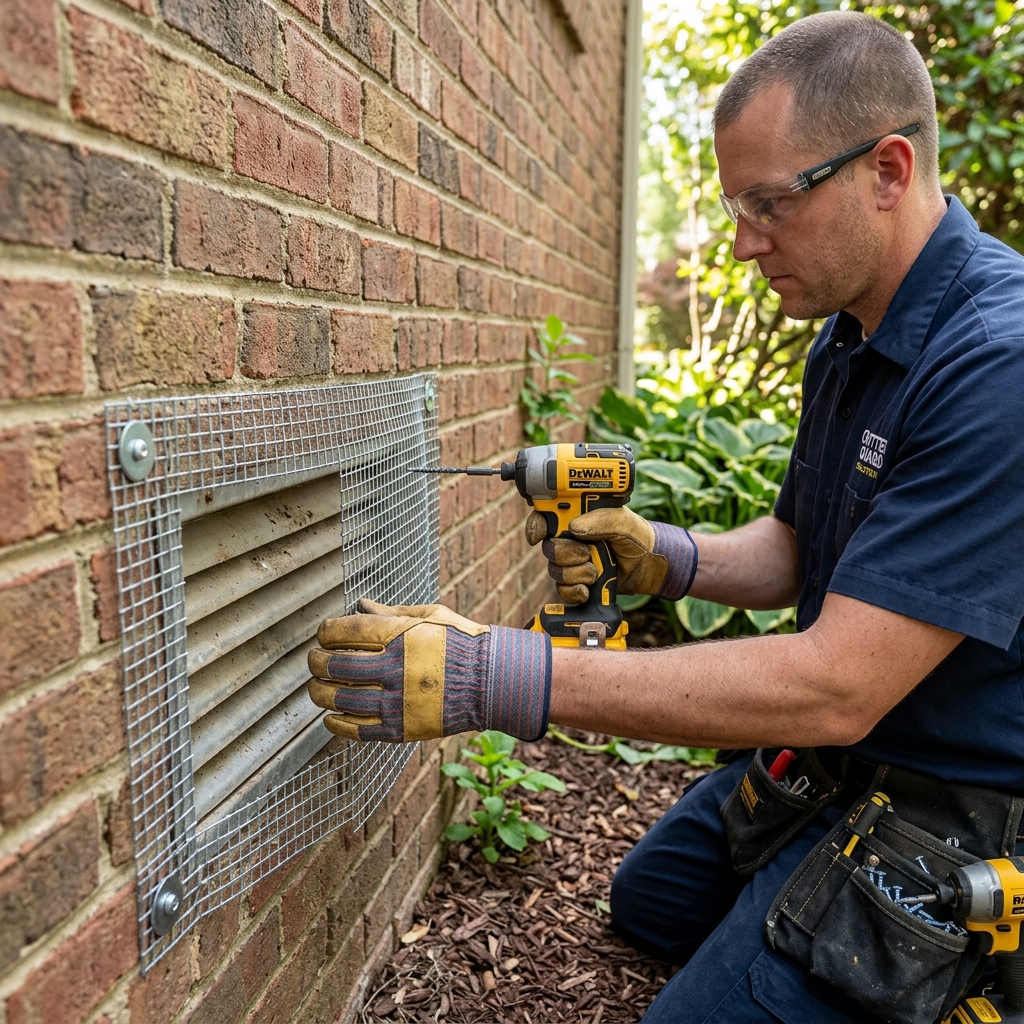
Getting the squirrels out is half the work. Squirrel exclusion is the rest, closing every opening they used so the next squirrel cannot move in. NC Wildlife recommends closing entry points into the home with half-inch hardware cloth or chicken wire.
Trees count as much as holes. NC Wildlife calls trimming tree limbs back at least 6 feet from the house one of the best ways to stop squirrels from reaching the roof and nesting inside. A limb hanging over the roof undoes good sealing.
Ask the company to show you the openings it closed, and to look over the attic wiring for chew marks. Chewed wires are a job for an electrician, not something to tape over.
Tip: have the branches cut back before the sealing visit, so a squirrel cannot jump from a limb straight onto the new work.
Mothballs, Strobe Lights and Other Squirrel Repellents
Will mothballs keep squirrels out of your attic? NC State Extension recommends no repellents for squirrels. Mothballs, rags soaked in ammonia, a strobe light or a radio left playing in the attic all get tried, and none of them closes the hole the squirrels came through.
Fewer squirrels around the house does help. NC Wildlife says bird feeders will likely bring more squirrel activity to a yard, suggests baffles or trays on any feeders you keep, and advises against feeding pets outside. For the attic itself, NC Wildlife's two main steps are closing the entry points and cutting back the limbs.
Squirrel Removal Cost: What the Quote Should List
Prices are set by the company that does the work, so there is no squirrel removal cost to quote on this page. When you compare quotes, check what each one writes down:
- The removal method: one-way doors, traps or both
- How many visits are included
- Every opening to be sealed, listed by place (roof vent, soffit, gable, roof edge), and the material used
- Ladder or roof work for openings high on the roofline
- A check of the attic wiring for chew marks
- Attic cleanup or insulation work as its own line, if you want it done
Ask for that list on paper before anyone goes up a ladder. A quote that only says "squirrel removal" leaves out the part that keeps them from coming back.
Tip: if two prices are far apart, line the quotes up item by item and check that both include the sealing.
Hearing Squirrels Overhead Right Now
If you are searching for squirrel removal near me from a Mooresville or Davidson home, call (844) 595-3326, answered 24/7. For a job that can wait, like a hole you spotted in the soffit last week, use the form below or the one on our contact page.
Frequently Asked Questions
Can squirrels get in through roof vents?
Yes. NC Wildlife names vents and gaps between shingles as ways squirrels get into homes, along with holes they chew themselves. Roof and gable vents belong on the list of openings to cover with hardware cloth.
Can squirrels get into walls?
Yes. Squirrels den in buildings, and NC State Extension says that when they do, they gnaw through siding and electrical wires. Mention scratching inside a wall on the call, so the wall gets checked along with the attic.
Will squirrels leave the attic on their own?
Do not count on it. NC Wildlife describes gray squirrels as active year-round and attics as safe, warm nesting places, so there is no quiet season to wait for. The fix is getting them out and closing the way in.
Can I trap a squirrel and let it go somewhere else?
Only with a depredation permit, and only onto private property where the landowner has given permission, NC Wildlife says. Releasing a squirrel on public land or by a road is not allowed.
Do flying squirrels damage a house?
Usually not much, according to NC Wildlife. They can make quite a racket but generally cause no significant problems. While the gaps stay open they can keep using the attic, so they need the same way out and the same openings closed.
What should I do with a baby squirrel I found?
Leave it where it is. If a nest fell from a tree, NC Wildlife advises leaving the young alone for 24 hours to see if the mother comes back. Only wildlife rehabilitators with a state license may keep injured or orphaned squirrels, so call one before picking it up.