Are there snakes in Lake Norman? Yes, and most of the Lake Norman snakes people notice on docks, rock walls and out in the water are harmless water snakes. The North Carolina Wildlife Resources Commission (NC Wildlife) places the cottonmouth, also called the water moccasin, mainly in the Coastal Plain, while water snakes live all over the state. The venomous snake you are more likely to run into near the lake is the copperhead, which NC Wildlife calls the most common and widespread venomous snake in North Carolina.
Away from the shoreline, snakes in Mooresville, NC turn up in pine straw beds, woodpiles, crawl spaces and garages, the same as anywhere else in the Piedmont. For the full species list, see our guide to snakes in North Carolina. On the Davidson side of the lake, see our page on snake help in Davidson.
Is a snake inside your house, garage or boathouse right now? Keep everyone back and call.
Snakes in Lake Norman: What People Usually See
The water snake NC Wildlife documents for the Piedmont is the northern watersnake (Nerodia sipedon, also spelled northern water snake). It is non-venomous, reddish brown and usually cross-banded, and it eats fish and amphibians, so docks, boat ramps and shoreline rocks with small fish and frogs nearby suit it well. When threatened, it spreads its jaws to look larger, which can make a harmless snake look dangerous.
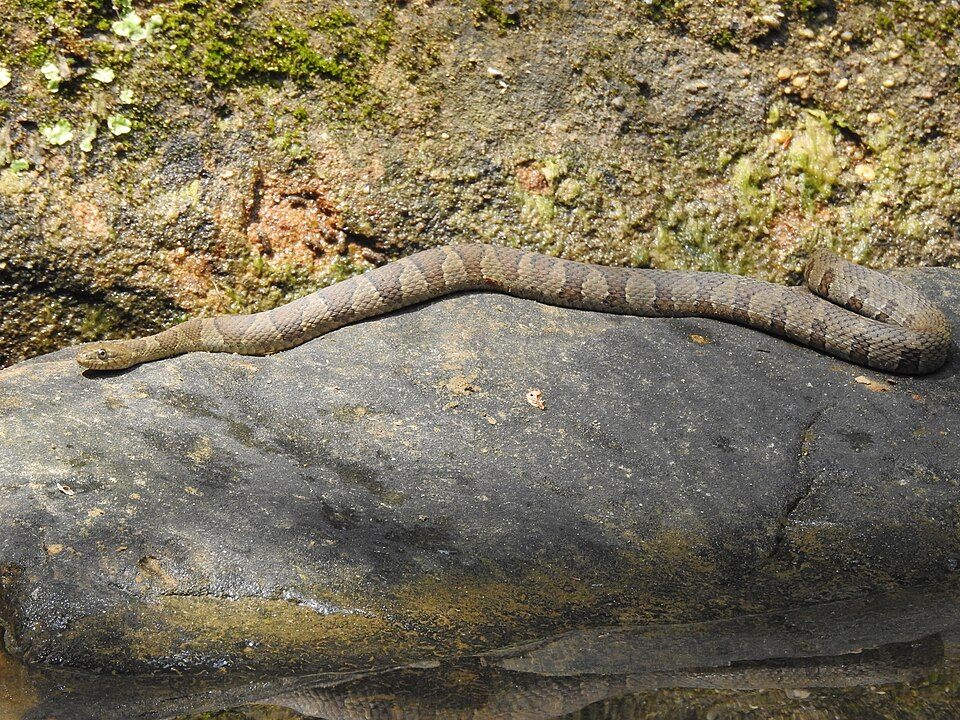
On land near the water you may also come across black rat snakes and copperheads. If a banded snake in the leaves worries you, our page on how to identify a copperhead covers that look. This guide sticks to the snakes in and on the water.
Brown, Black and Banded Water Snakes in NC
People describe water snakes by the color they saw: brown, banded, reddish or nearly black.
NC Wildlife has no separate species page for brown or banded watersnakes, so we do not claim which of them live in the lake. Water snakes in NC as a group are another matter: NC Wildlife says they occur statewide.
Tip: color alone will not tell you whether a snake is safe. The signs in the table further down are the ones NC Wildlife lists, and you can see them from well back on the dock.
Are Water Snakes Poisonous?
No. NC Wildlife says watersnakes are harmless to people because they have no fangs and no venom glands. (Strictly speaking, snakes are venomous, not poisonous.) A water snake can still bite if someone grabs it or pins it down, so the advice does not change: leave it alone.
The one snake behind most fears about poisonous water snakes in North Carolina is the cottonmouth, which NC Wildlife calls the most aquatic venomous snake in North America.
Are There Water Moccasins in North Carolina?
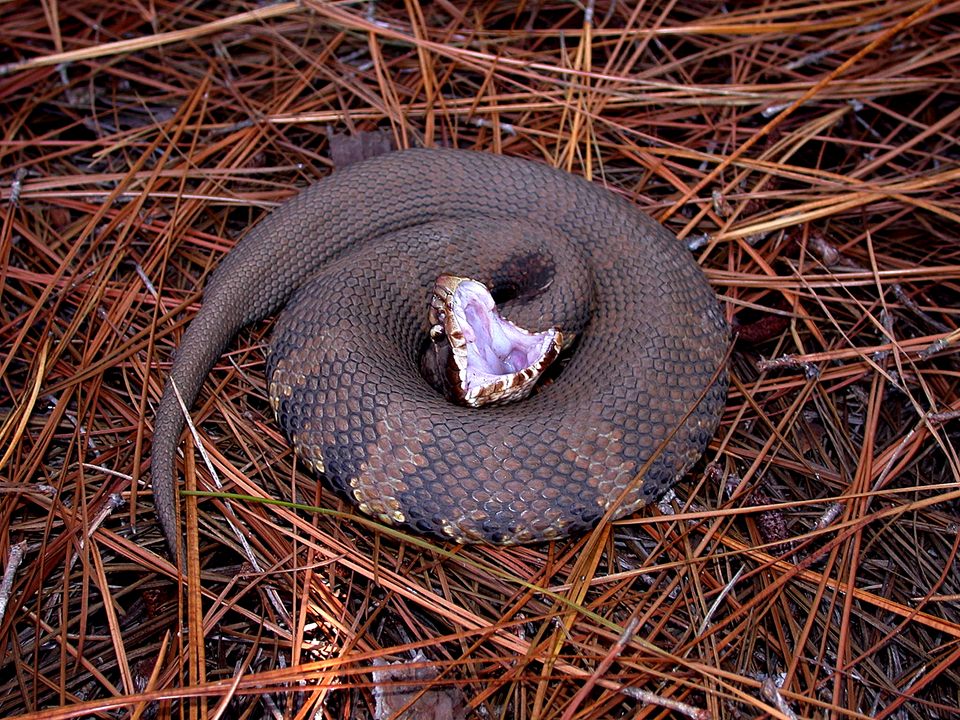
Yes. The water moccasin and the cottonmouth are the same snake, Agkistrodon piscivorus. NC Wildlife explains that the cottonmouth name comes from the white lining of its mouth, and the snake is venomous. So, are water moccasins poisonous? They are venomous, and a bite needs a doctor right away.
The NC Wildlife cottonmouth profile says that in North Carolina, cottonmouths are mostly found in the Coastal Plain and on parts of the Outer Banks, and are common in the eastern part of the state. Mooresville and Lake Norman sit in the Piedmont, west of that range. Where do water moccasins live within their range? NC Wildlife says in most habitats associated with water, basking on branches, logs or stones at the water's edge, and they are most active at night.
Water Moccasin Lake Norman Reports
A snake on a Lake Norman dock often gets called a water moccasin, but NC Wildlife's range notes point the other way: water snakes live statewide, while cottonmouths are mostly a Coastal Plain snake. Still, nobody can promise from a post or a photo that a cottonmouth will never turn up, so treat any snake you cannot name as venomous and keep your distance.
Tip: a snake that dives and swims off underwater is acting like a water snake, according to NC Wildlife. Take that as a reason to relax, not a reason to lean over the dock for a better look.
Cottonmouth vs Water Snake: What You Can See From a Distance
The difference between cottonmouth and water snake shows most in how each one behaves. These NC water snake identification points all come from NC Wildlife, and if you want to know how to identify a water moccasin, the first row is the easiest one to see. Use them from a safe distance only. If you are close enough to see a snake's pupils, you are too close, and no photo can settle the question for certain.
| What to look at | Cottonmouth (water moccasin) | Water snake |
|---|---|---|
| In the water | Swims across the surface | Dives under to get away |
| When bothered | Coils, shakes its tail and opens its mouth wide to show the white lining | Spreads its jaws to look larger; does not gape |
| Head | Much wider than the neck, with a dark bar from the eye to the jaw | Can look wide while its jaws are spread |
| Dark crossbands | Widest on the sides, narrowest on top | Widest on top of the back |
In a water moccasin vs water snake mix-up, the head is the trap: a water snake with its jaws spread looks wide-headed on purpose. Around Lake Norman, the question is usually cottonmouth vs northern water snake.
Baby Water Moccasin vs Water Snake
NC Wildlife says young cottonmouths have a bright yellow or greenish tail tip, and young water snakes do not. Older cottonmouths can go completely dark with no pattern at all, which is one more reason not to rely on color.
What does a water snake look like when it is small? It has no yellow tail tip, and its water snake markings follow the table: dark bands widest across the back. If a small banded snake makes you think of a copperhead, our baby copperhead guide covers that look.
Snake on Dock, Boat Lift or Rock Wall: What to Do
Finding a snake on dock boards, a boat lift or a rock wall usually comes down to sun, shelter and food. Rock walls along the shore are full of gaps to slip into, a boathouse adds shade and stored gear to hide behind, and fish and frogs are close by. Basking at the water's edge is normal for snakes in NC lakes, so a snake sunning on the rocks is not a problem by itself.
- Stop and step back. NC Wildlife's advice is to leave the snake alone and give it plenty of space.
- Clear the dock. Get kids and dogs off the dock or out of the boathouse until the snake moves on.
- Keep hands out of gaps. Do not reach under boards, into lift cradles or between rocks, and do not try to hook the snake out with a pole.
- Watch where it goes. From a distance, note where it went, so you can tell the company exactly where to look if you call.
Tip: call if the snake is inside the boathouse, in stored gear or life jackets, in the house, or if it keeps sitting where people have to walk. If it slips into the water or the rocks on its own, there is nothing more you need to do.
You cannot keep snakes that live in water out of the lake itself. For the dock and yard, our prevention guide explains how to keep snakes away and which popular fixes do not work. Our page on Mooresville neighborhoods lists The Point and the other lake-access neighborhoods.
If a Snake Bites You or Your Dog
If a snake you could not identify bites you, treat the bite as venomous and get medical care right away. Our copperhead removal page covers what to do after a copperhead bite, the venomous bite most likely around the lake.
What happens if a northern water snake bites you? NC Wildlife says watersnakes have no fangs or venom glands, so it is not a venomous bite. That only holds if you are sure it was a water snake. If you are, wash the bite and ask your doctor if you have questions; if you are not, follow the advice above.
If your dog is bitten by any snake, call your vet right away.
Who to Call for a Snake at the Lake
A call to Mooresville Snake Removal puts you through to a local snake removal company in the Mooresville area. If the snake is in your house, garage or boathouse right now, call. Do not stop to fill out a form while it is in the room. Our page on what to do about a snake in the house covers the minutes while you wait.
The estimate form is for things that can wait: shed skins under the dock, a snake you keep seeing on the same rock wall, or gaps in a boathouse or crawl space that need closing. For that last one, ask about snake exclusion.
Snake at Your Dock or in the Boathouse?
Call (844) 595-3326 to reach a local snake removal company, or send the form for anything that can wait.
Get Free EstimateLake Norman Snake Questions
Does Lake Norman have snakes in the water where people swim?
Yes. Water snakes swim in the lake, and NC Wildlife notes they readily dive under the water to escape. If you are wondering is it safe to swim in Lake Norman with snakes around, the snake answer is simple: give any swimming snake room and swim the other way. Lake water quality is a separate question this page does not cover.
Is a water moccasin the same as a cottonmouth?
Yes. They are two names for one venomous snake, and NC Wildlife lists water moccasin as another name for the cottonmouth. Any water moccasin vs cottonmouth chart is comparing a snake with itself.
Do water snakes chase swimmers or boats?
NC Wildlife's profile says water snakes readily dive to get away from threats, and nothing in its species pages describes them chasing people. If one swims your way, move aside and let it pass.
Should I kill a snake I find on my dock?
No. NC Wildlife says a large percentage of copperhead bites happen when people try to capture, kill or handle the snake, and the same caution makes sense with any snake. Step back, and call if it needs to go.