Scratching over the bedroom at night, droppings in the crawl space, a raccoon living under the deck. For wildlife removal in Mooresville and Davidson, homeowners can call (844) 595-3326. The line is answered 24/7 and connects you to a local wildlife control company. The state does not do this job for you. The NC Wildlife Resources Commission (NC Wildlife) says it does not provide any trapping or wildlife removal services.
Until someone comes out, keep children and pets out of the attic or crawl space, and do not try to pick up or corner the animal. Leave the hole it uses open for now, so nothing gets shut inside. If someone has already touched one or been bitten, NC Wildlife says to wash the spot right away with soap and water and call your doctor or the county health department.
Animal in Attic or Walls? What the Time of Day Tells You
You do not need to know what it is before you call. The time of day still narrows it down, using the activity times NC State Extension and NC Wildlife give. Most people describe the noise as scratching, running or scurrying, and the time it happens says more than the sound.
| When you hear it | Most likely animal | Source |
|---|---|---|
| Early morning and late afternoon | Gray squirrels | NC State Extension: most squirrels are most active in early morning or late afternoon |
| After dark | Flying squirrels, rats or raccoons | NC State Extension: flying squirrels and rats are nocturnal; raccoons are active mainly at night |
| Day and night, in spring | A night animal caring for young | NC Wildlife: nocturnal animals are often awake day and night in spring while caring for newborns |
Rat droppings are capsule shaped and about half an inch to three quarters of an inch long, according to Extension. Chewed wires matter most. Extension notes that squirrels gnaw electrical wiring in buildings, which is a fire hazard. Mention yellow stains on a ceiling, a smell that keeps getting worse, or torn soffit screens on the call too.
Tip: while you wait for the visit, note what time you hear the noise and where in the house. Pass it on when someone comes out.
Wildlife Control in North Carolina: What the Law Allows
In North Carolina this work is done by a Wildlife Control Agent, a private contractor that holds a license from NC Wildlife. NC Wildlife says these agents can remove animals that are causing damage, fix the damage in some cases and help you prevent future problems. They can only remove animals that are causing damage.
NC Wildlife's no-relocation list covers the order Carnivora (raccoons, skunks, foxes, coyotes, bears, bobcats, mink, weasels and otters), plus armadillos, groundhogs, nutria and beaver. Any of these trapped because it causes damage must be humanely euthanized or released on the same property where it was caught, so driving a raccoon out to the woods is not legal here. Species not on that list can be released where they were caught, or on someone else's private land with that owner's permission, but never on public land or a roadside.
NC Wildlife also says relocation does not solve the problem that drew the animal in. A proper job gets the animals out and then closes the openings they used, so the next one cannot move in.
Tip: ask the company for its NC Wildlife Control Agent license number before work starts, and ask what will happen to the animals. A clear answer to both is a good sign.
Who to Call for Wildlife Removal Around Mooresville
A search for "wildlife removal near me" from a Mooresville or Davidson address brings up a long list. One call to (844) 595-3326 puts you through to a local wildlife removal company that works in both towns, and the line is answered 24/7. That matters on a Saturday night when something is moving above the kids' room.
NC Wildlife does not send anyone out. In Davidson, the town's police department says officers are not dispatched for wild animal intrusions such as a raccoon, fox, coyote or snake. Town or county animal services is still the right call for pets and stray dogs.
A wild animal that looks sick is different. If it shows the rabies signs NC Wildlife lists, such as unprovoked aggression, acting drunk or confused, seeming unaware of its surroundings or biting at the air, stay away from it and notify your local animal control, which is NC Wildlife's advice. A raccoon out in daylight is usually not rabid, NC Wildlife adds (see the spring row in the table above).
Animals Found in Mooresville and Davidson Homes
Whether you call it animal removal or critter removal, mention on the call if you have seen more than one animal, or young ones. That changes how the job is done.
Squirrels and Flying Squirrels
NC State Extension says gray squirrels and flying squirrels usually cause the problems in North Carolina. When they den in buildings, Extension says, they gnaw through siding and wiring and break weather seals. A gray squirrel is about 16 to 20 inches long; a southern flying squirrel is 9 to 14 inches and active at night. Extension suggests trimming limbs at least 6 feet back from the house so squirrels cannot jump onto the roof.
Bats
Do not pick up or handle a bat at all, alive or dead; call instead. NC Wildlife says killing bats is not necessary to solve most problems with bats roosting in a building, and that eviction and exclusion are the most effective methods. In practice the bats are let out and the gaps they used are sealed behind them.
Raccoons
Pet food, bird food and garbage draw them in, NC State Extension says, and they are mainly active at night. A trapped raccoon stays on your property or is euthanized (see the NC rule above), so closing the entry point afterwards is the step that keeps it from coming back.
Rats and Mice
Extension describes rats as active from dusk until dawn and says no repellents have been proven to work against them. The lasting fix is sealing the ways in. Rodents also bring snakes. A big snake in the attic is often a rat snake following them, and our page on black rat snakes covers that case.
Opossums Under the House
Opossum removal is simpler under NC rules than raccoon removal. Opossums are not on the NC no-relocation list above, so a trapped opossum can be released where it was caught or on other private land with the owner's permission. Whether it is under the deck or a possum in attic insulation, tell the company where you have seen it come and go.
Skunks Under a Deck or Shed
The same NC rule as for raccoons applies to skunk removal: released on the same property or euthanized. With a skunk under deck boards or a shed floor, the real fix is getting it out and then closing off the space under the structure so another one cannot move in.
Birds in Vents, Chimneys and Attics
If birds are nesting in a dryer vent, bathroom fan or chimney, bird removal starts with a question, because not every nest can be touched. NC State Extension notes that woodpeckers, for example, are protected by the federal Migratory Bird Treaty Act. Before any bird nest removal, ask the company what can legally be done with an active nest, then fit a cover over the vent once it is clear.
Moles in the Lawn
Raised ridges across the lawn are usually moles. If you want to get rid of moles, skip the gadgets. NC State Extension says electronic, magnetic and vibrating devices have not been shown to repel them. It also says moles are not rodents and are more active during rainy periods in summer. Extension adds that trapping eastern moles requires a depredation permit, which is one more reason to leave it to a company.
Two related jobs have their own pages. A smell from a wall or crawl space is covered on our dead animal removal page, and for snakes, start with how a snake removal call works in Mooresville.
Before You Seal a Hole or Set a Trap
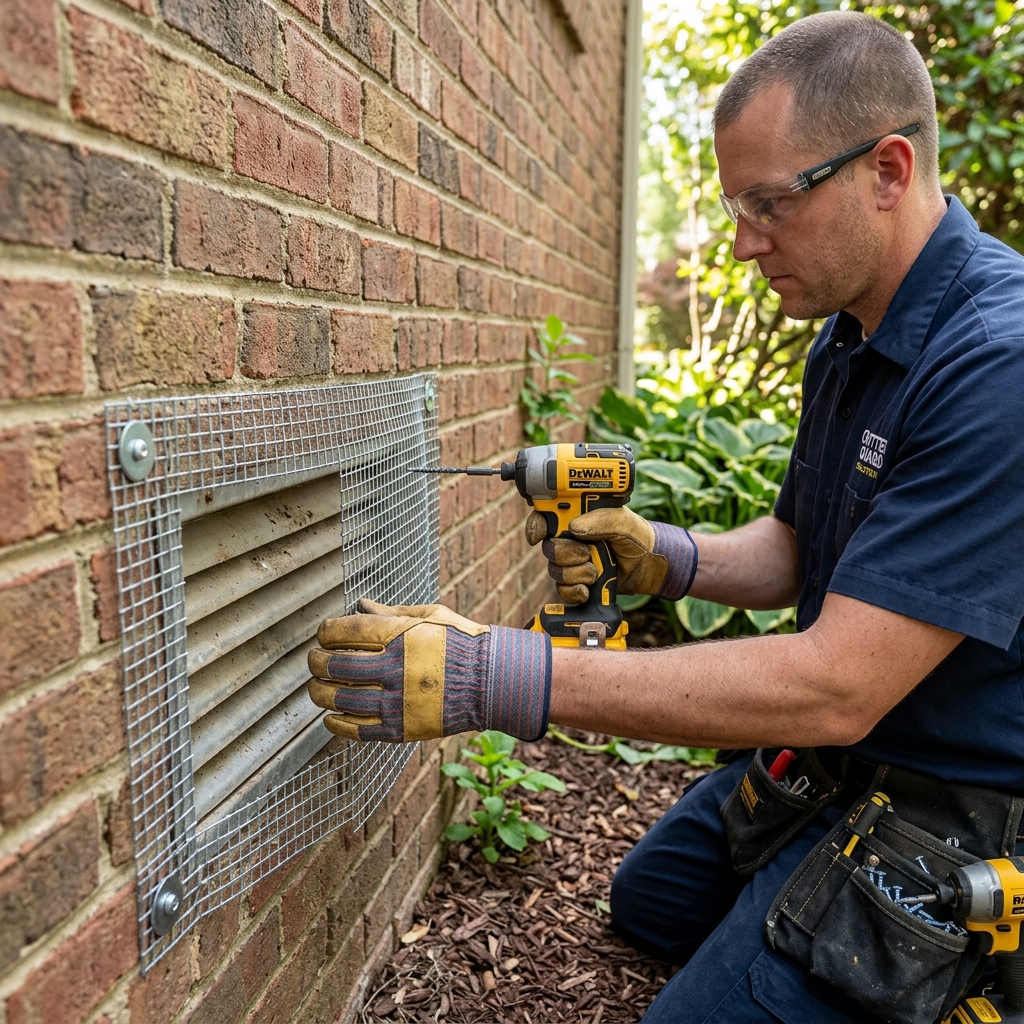
NC State Extension's advice for squirrels in a house is to repair the building only after the last squirrel is out. Close it too early and you trap animals inside the walls. Sealing every opening once the animals are gone is called wildlife exclusion, and it is the half of the job that keeps them out.
Setting a trap yourself is not a shortcut. NC Wildlife says it is the trapper's responsibility to visit traps daily and remove any captured animal, and that it will not pick up an animal you trapped. Leave trapping and handling to the company.
Skip the sprays and the plug-in sound boxes. Extension recommends no repellents for squirrels or raccoons (rats are covered above). Feeding pets indoors and keeping bird seed and garbage in sealed containers takes away what draws raccoons in, and the branch trimming in the squirrel section keeps the roof out of reach. The same idea keeps snakes out; our page on snake exclusion shows the entry points at ground level.
Tip: if you are not sure whether anything is still inside, do not seal the opening. Tell the company; making sure the last animal is out is part of the job.
Wildlife Removal Cost: What Changes the Price
Each company sets its own price, so there is no single number to quote here. Wildlife removal services are priced job by job, and these things move the price:
- How many animals there are, and whether young are involved
- How many openings have to be sealed, and how high up they are on the roof
- Cleanup of droppings or damaged insulation in the attic
- How many return trips are needed to check traps or one-way doors
Before work starts, ask what the price covers: removal alone, or removal plus sealing. Ask whether return visits are included and what happens if an animal gets back in.
Tip: get the scope of work in writing, with the openings to be sealed listed, before you agree to a price.
Hearing Something in the Attic Tonight?
Call (844) 595-3326 any time, day or night. For a job that can wait, like droppings you found last week, use the form below or the one on our contact page.
Frequently Asked Questions
Who removes wild animals from a house in Mooresville?
A private wildlife control company. NC Wildlife does not provide trapping or removal, so in Mooresville and Davidson you call a private company. Our line at (844) 595-3326 is answered 24/7 and connects you to one.
Does the state pay for wildlife removal?
No. NC Wildlife does not provide removal, and it says Wildlife Control Agents help with removals for a fee. Each company sets its own price, so ask for it before work starts.
Can a trapped raccoon be moved to the woods?
No. NC Wildlife says raccoons trapped because they cause damage must be humanely euthanized or released on the same property where they were caught. The same rule covers skunks, foxes, coyotes and groundhogs.
Will NC Wildlife pick up an animal I trapped?
No. NC Wildlife says it is the trapper's responsibility to visit traps daily and remove any captured animal, and that a Wildlife Control Agent can be hired instead. Do not handle a trapped animal yourself; call the company.
What does humane wildlife removal mean in North Carolina?
Mostly, getting the animal out and sealing it out, not moving it. NC Wildlife says relocation is not a humane or environmentally responsible fix, because moved animals often die or try to return. For bats, it says killing them is not necessary and that eviction and exclusion work best.
What should I do if a wild animal bit or scratched someone?
Wash the spot right away with soap and water, then call your doctor or the county health department, which is NC Wildlife's advice for any contact with a possibly rabid animal. Keep everyone away from the animal.