A dead snake, rat, or squirrel hidden away in your walls or crawlspace can create an absolutely unbearable odor that quickly takes over your entire home. Our team provides professional dead animal location, safe extraction, and comprehensive odor control to get your house back to normal.
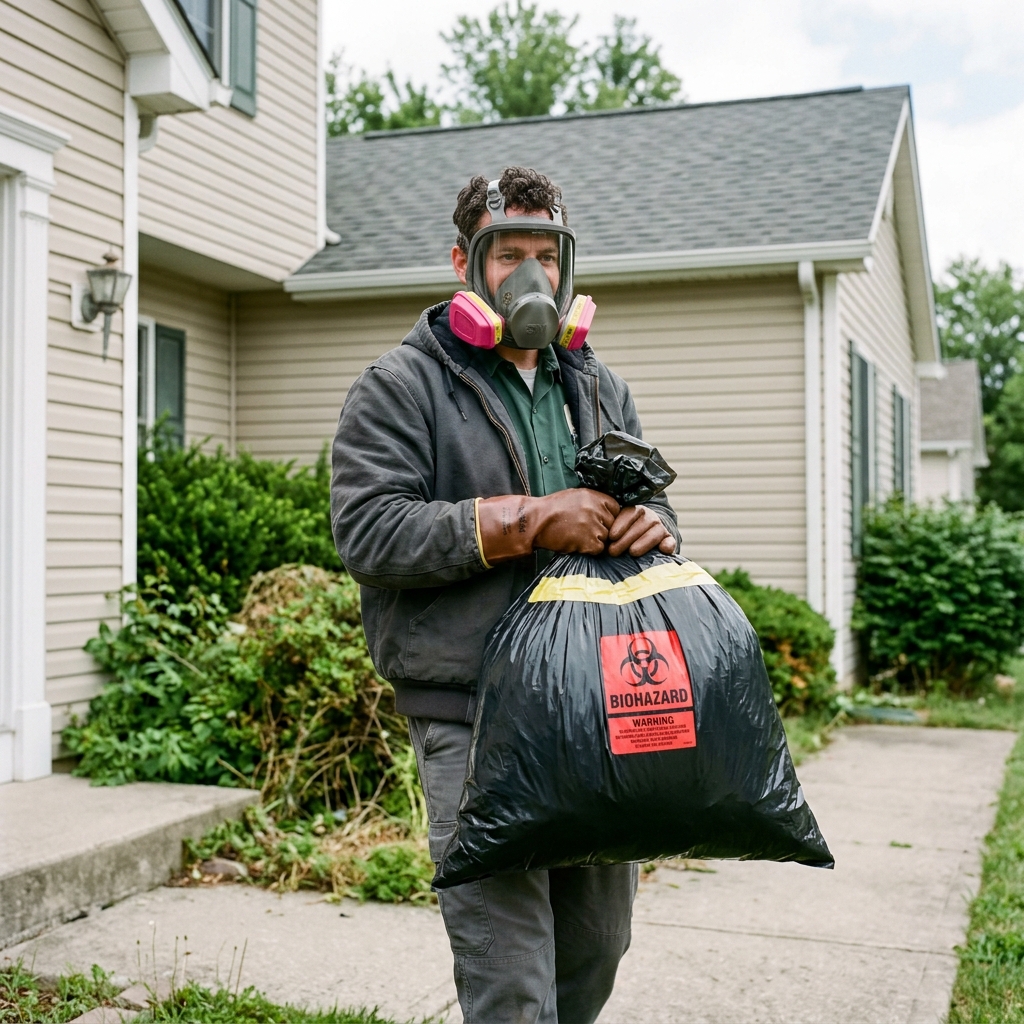
The Problem with Dead Animals Inside
It usually starts with a faint, unpleasant smell that quickly escalates over a few days into a pungent, unbearable stench that permeates your entire house. Worse, the decaying carcass becomes a breeding ground for blowflies, maggots, and bacteria.
A common scenario in Mooresville occurs when homeowners put down rat poison. The rodents eat the poison, crawl deep into the wall voids or ductwork to die, and create a nightmare. Sometimes, snakes follow those poisoned rodents into the house, eat them, and then also die inside the walls.
Our Dead Animal Removal Process
Extracting a dead animal from a home requires specialized equipment and a strong stomach. Our team handles the dirty work so you don't have to.
- Pinpointing the Source: The hardest part of the job is finding the carcass. Smell can be deceptive because air currents carry it through vents and wall cavities. We use our expertise and specialized inspection cameras (boroscopes) to locate the animal, even if it's trapped behind drywall.
- Safe Extraction: If the animal is in a crawlspace or attic, we remove it directly. If it is in a wall void, we carefully cut the smallest possible hole in the drywall to extract the carcass, which you can later have patched.
- Sanitization & Decontamination: Removing the body doesn't instantly remove the smell, as bodily fluids often soak into insulation or wood. We remove contaminated insulation and treat the area with professional-grade enzymatic cleaners that break down the biological matter causing the odor.
- Odor Control: Finally, we use commercial odor neutralizers (not just cover-up sprays) to restore the air quality in your home.
Preventing Future Incidents
Once the immediate problem is solved, we highly recommend an inspection to determine how the animal got inside in the first place. Through our exclusion and sealing services, we can ensure you never have to deal with this horrific smell again.
How Long Will That Terrible Smell Last?
This is usually the very first question we get when the phone rings. The short answer is: it depends entirely on the size of the animal and the weather.
If it's a small mouse that died inside a wall cavity, the smell is going to be incredibly intense for about three to five days. After that, as the carcass dries out, the odor will slowly fade over the next week or two. But if you're dealing with something larger (a squirrel, an opossum, or a raccoon), you're in for a much longer haul. Those can produce an overwhelming stench that lingers for a month or more, especially in the humid heat of a North Carolina summer.
Summer heat actually accelerates the decomposition process, which means the worst of the smell might pass a little quicker. But there's a nasty side effect: the fluids released during decomposition can soak deep into your insulation, wood framing, and drywall. When that happens, you might be stuck with a lingering, phantom odor long after the animal is completely gone.
Should You Wait It Out or Call a Professional?
It's tempting to just crack a window, light a candle, and hope the smell goes away on its own. And sometimes, that's actually a reasonable approach. If the odor is mild and isolated to one small area (suggesting it's just a single mouse) and you can tolerate it for a week or two, waiting it out might be fine.
However, if the smell is eye-watering and seems to be getting worse day by day, you're likely dealing with a larger animal. At that point, waiting isn't really an option. You should also call us immediately if you start seeing a sudden cluster of flies near a specific wall or vent. That means the decomposition is advanced enough to attract insects. If the odor starts spreading through your HVAC system into multiple rooms, or if anyone in your family has respiratory sensitivities, it's time to bring in professional help.
The Problem with Store-Bought Rat Poison
We see this scenario play out almost weekly in Mooresville. A homeowner realizes they have mice in the garage or attic, so they buy some rodenticide blocks at the hardware store. The mice eat the bait, but here's the catch: they rarely die right there next to the bait station.
Instead, the poisoned rodent feels sick and instinctively crawls deep into the most inaccessible, "safe" place it can find to die, usually a wall void or a cramped duct. A few days later, the smell hits. To make matters worse, sometimes a snake will track that dying rodent into the wall, eat it, and then get trapped or die itself, compounding the problem.
This is exactly why most wildlife professionals strongly advise against using poison inside your home. Snap traps or professional trapping services let you actually find and dispose of the rodent before it turns into an odor nightmare. But if you're already at the nightmare stage, give us a call.
Health Risks of Dead Animals in Your Home
A decaying animal inside your house isn't just gross. It's a legitimate biohazard. Decomposing tissue harbors bacteria like Salmonella and E. coli, which can become airborne or spread if you try to clean it up without the right gear.
Then there are the hitchhikers. When an animal dies, any fleas, ticks, or mites that were living on it will quickly abandon ship, looking for a new host. In a house, that new host is usually you or your pets. There's also the risk of blowfly infestations; they're drawn to the remains and can lay hundreds of eggs, resulting in maggots emerging from baseboards or light fixtures. Finally, the bodily fluids we mentioned earlier can severely contaminate your attic or wall insulation, which usually requires professional removal and sanitization to make your home safe again.
Frequently Asked Questions
Can I just use air fresheners or scented candles?
Masking products don't address the source and often make the overall smell worse by combining with the decomposition odor. Charcoal-based odor absorbers (like activated charcoal bags) can help reduce mild odor while you wait, but they won't eliminate a strong smell from a larger animal.
Will the smell damage my home permanently?
In most cases, no. Once the source is removed and the area is cleaned, the smell will fully resolve. However, if decomposition fluids have soaked into porous materials (drywall, wood, insulation), those materials may need to be replaced to fully eliminate the odor.
How do you find the dead animal if it's inside a wall?
We use a combination of experience, odor tracking, and inspection cameras (boroscopes). Flies and insects often congregate near the exact location, which helps narrow the search. In some cases, we may need to cut a small access hole in the drywall, which can be easily patched afterward.
Don't Live With the Smell
We can find it, remove it, and eliminate the odor. Call (844) 595-3326 for fast dead animal removal in Mooresville, NC.
Get Free Estimate